Grape Harvest Season in Montenegro: Where to Experience ‘the Berba’
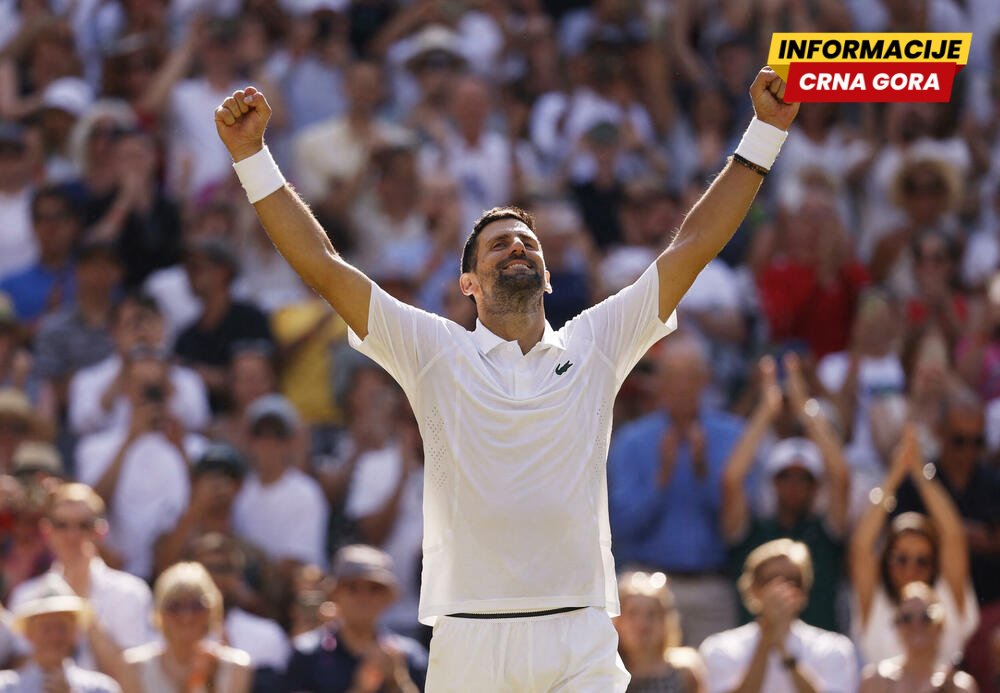
Every athlete knows a certain format: the rapid-fire question round, filmed for a streaming platform, designed to be light and quotable. Answer fast, don't overthink it, move on. Novak Djokovic did one recently for Amazon Prime, covering the Balkans and beyond regarding coffee, nightlife, music, fans, beaches. And somewhere in the middle of it, the questions stopped being about preference and started being about something else: Montenegro
The early questions went where you would expect. Nightlife: Serbia. Music: Serbia and Montenegro. Best fans: South America. Coffee: he doesn't drink it.
Then beaches. And here Djokovic gave the answer that makes the rest of the list credible — Croatia. Not a diplomatic hedge, not a shared credit. Croatia, straight.
That matters, because everything after it reads differently.
And if you could only live in one of them forever? Montenegro.
Djokovic is not a casual visitor here. He has spent summers on the Montenegrin coast for years, trains at Porto Montenegro between seasons, and chose the country for the regional premiere of his documentary The Wolf in Winter, which screened this month at Forza Kuk, on the mountainside above the Bay of Kotor, in front of around 200 guests.
He is also a man with unlimited options. A player with 24 Grand Slam titles and a record 428 weeks at world number one can rest anywhere on earth, and most of the planet would be glad to have him. When someone in that position says a country of 620,000 people is where he feels most himself, it is worth asking what he is actually responding to.
The answer is probably in the phrasing of the questions themselves. Not best beaches, Croatia won that, fairly. Not best nightlife since it is Serbia. The questions Montenegro won were the ones about how a place makes you feel.
Switching off in Montenegro is easier than it should be for a country with this much coastline, because the scale is small and the distances are short. You can be in a stone village above Skadar Lake forty minutes after leaving a marina in Tivat. You can swim in the morning and be walking a mountain trail at 1,500 metres by early afternoon. There is no long transition, no travel day, no negotiation with a motorway. The country changes character faster than almost anywhere in Europe.
For someone whose year is a permanent negotiation with airports, tournament schedules and public attention, that compression is the product.
This one is less abstract. The Bay of Kotor faces west through the Verige strait, and on a clear evening the light comes down the length of the bay and lands on the water between Perast and Risan. From the serpentine road above Kotor, the old Cetinje route with its twenty-five hairpin turns and the entire inlet sits below you in the last hour of daylight.
Further south, the open Adriatic gives a different version. Sveti Stefan from the coastal path, Ada Bojana at the river mouth, or the long sand at Velika Plaža in Ulcinj, where thirteen kilometres of beach face directly into the sunset with almost nothing built on them.
Then there is Lovćen. At 1,657 metres, from the mausoleum steps, you see the bay, the coast, the mountains behind and, on the right evening, the outline of Italy across the sea.
It is a small country that has spent this summer collecting outside validation: BBC Travel's 2026 list, an EU summit in Tivat, the World Travel Awards Europe Gala arriving in Kotor Bay in October, a steady procession of visitors who could be anywhere.
But there is a difference between a country being recommended and a country being chosen. Djokovic has been coming here for years, long before it was on anyone's list, and when asked to pick one place to spend the rest of his life, he did not hesitate.