

Veliki međunarodni parastonoteniski turnir u Podgorici
Interview by: Ljubomir Filipovic
The interview with Andrija Lekic portrays him as a widely experienced filmmaker and photographer whose life and work are shaped by travel, history, and social issues. Despite a rich international career—working with major cultural figures and documenting events from Cairo to Fukushima—his current project in Arizona is deeply personal.
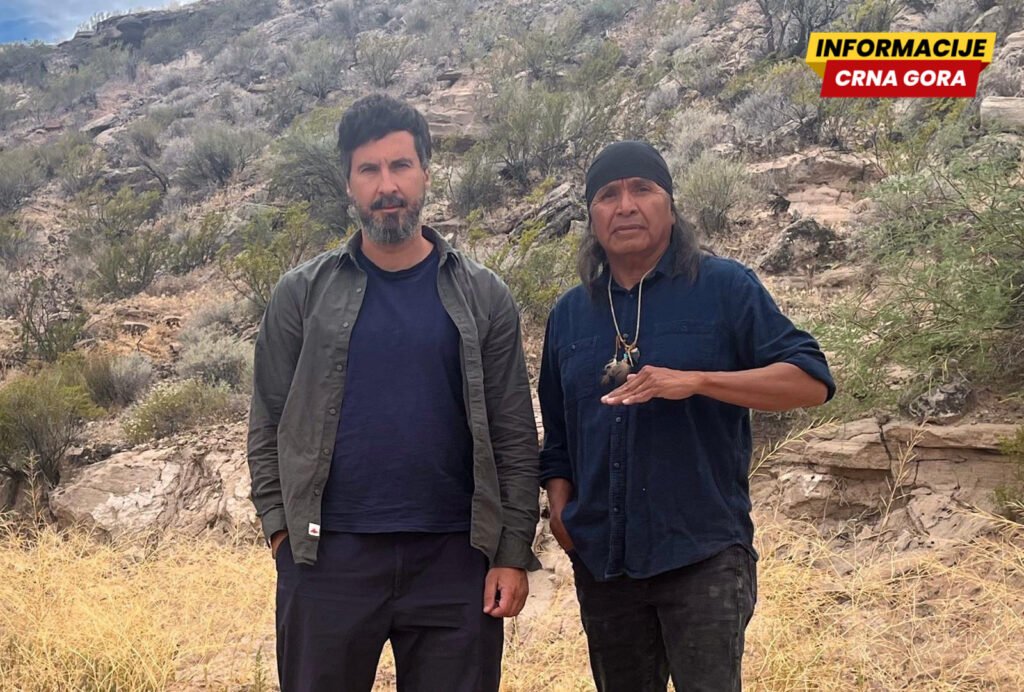
He explains that he came to Arizona at the invitation of Arizona State University to film a story about his ancestors, particularly his great-grandfather, who worked in mines across Turkey and later in Arizona before returning to fight in Balkan wars. This family history, marked by migration, war, and tragedy, inspired Lekic to explore themes of labour, displacement, and historical cycles.
A key part of his work in Arizona involves spending time with the Apache community, who are currently fighting to protect their sacred land from mining interests linked to Rio Tinto. Lekic draws parallels between their struggle and broader global issues, including environmental destruction, corporate power, and workers’ rights, though he avoids simplistic comparisons with Montenegro. He highlights the Apache community’s strong family values, respect, and connection to nature, contrasting their external oppression with what he sees as internal societal issues back home.
Addressing assumptions about his background, Lekic rejects the idea that he comes from privilege, explaining a complex family history that includes both communist elites and dispossessed industrialists. His life has been marked by constant movement, rarely staying in one place for long.
He notes that little was known in his family about earlier generations’ migrations until he began researching archives and retracing their paths. Encounters with traces of his ancestors in Arizona and Turkey sparked both excitement and discomfort, especially when confronting unknown burial sites and lost histories. These experiences feed into deeper reflections on identity, memory, and the idea of “home.”
Although he has witnessed major global events, Lekic says Montenegro and Serbia remain a source of inspiration because of his roots, though he does not feel bound by national identity. He sees such identities more as labels, focusing instead on personal understanding and human behaviour.
He maintains strong ties to Bar, Budva, and Belgrade through family and lifelong friendships. His films, he says, are meant for people drawn to introspection and complex themes, aiming to provoke reflection, reduce feelings of isolation, and shift perspectives.
The interview closes with the note that his current film project was denied funding by the Municipality of Bar, despite its international scope and local relevance, highlighting a disconnect between institutional support and artistic value.